
Dublin With Kids
Dublin sneaks up on you. You arrive expecting a pub city — lively, charming, slightly damp — and you find something richer: a compact, walkable capital where medieval churches stand at the end of ordinary streets, where global restaurants turn out incredible food and where the people are kind and open and love a little joke.
The Short List
The places we’d build the trip around
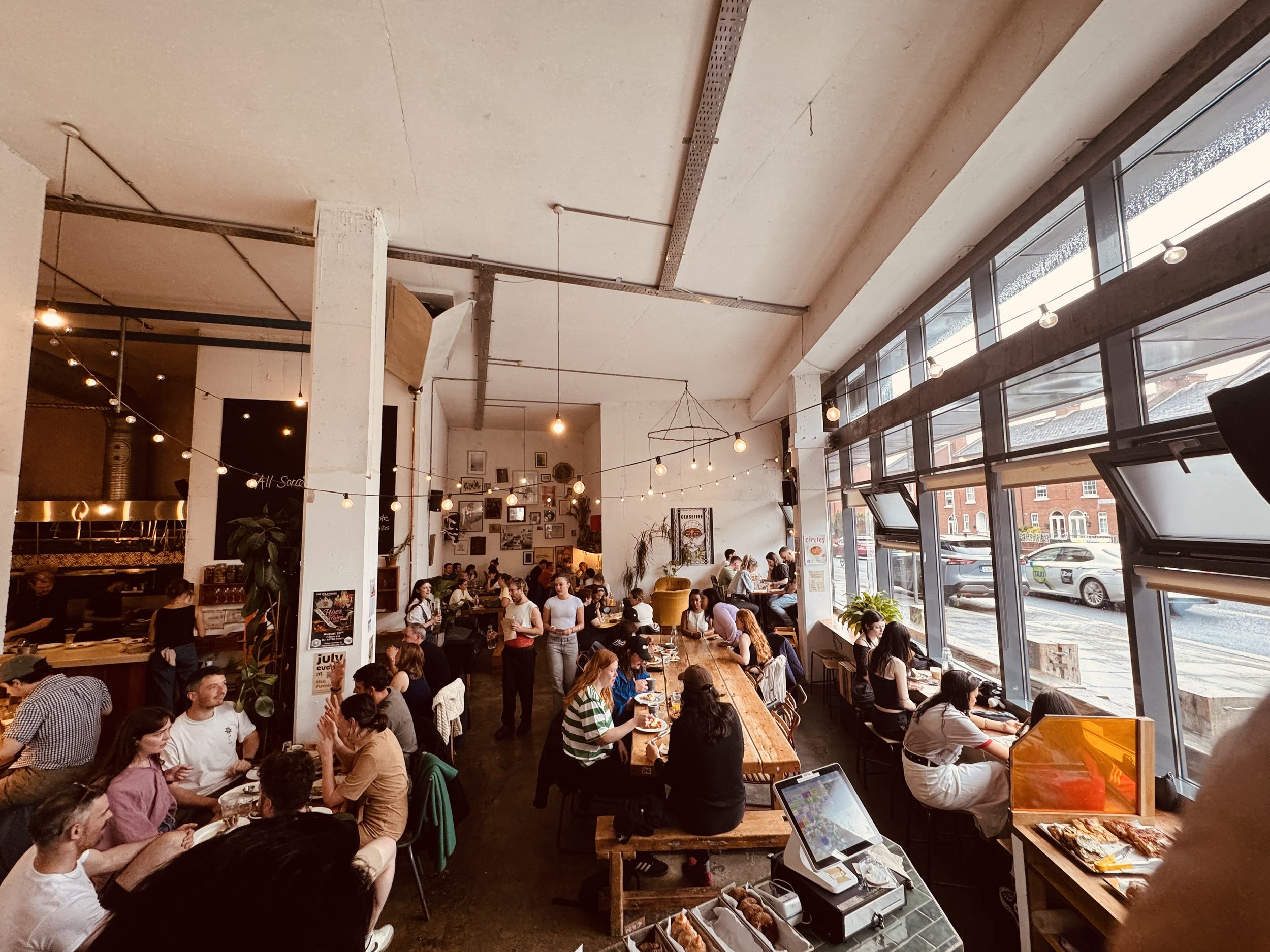
A beloved breakfast and lunch spot in an airy café with a produce and natural wine market.
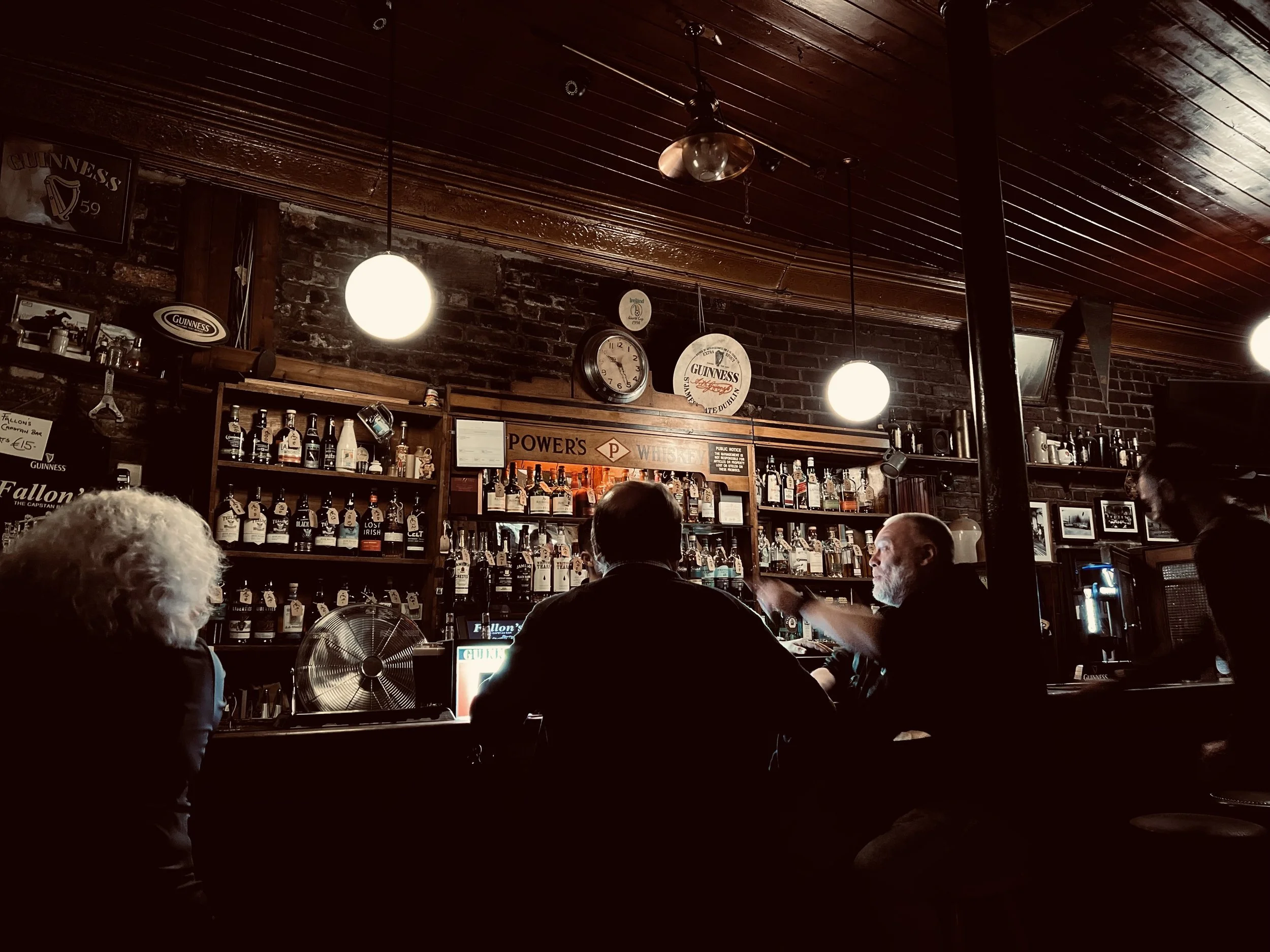
A 400-year-old pub in the heart of the Liberties, full of old Dublin character.
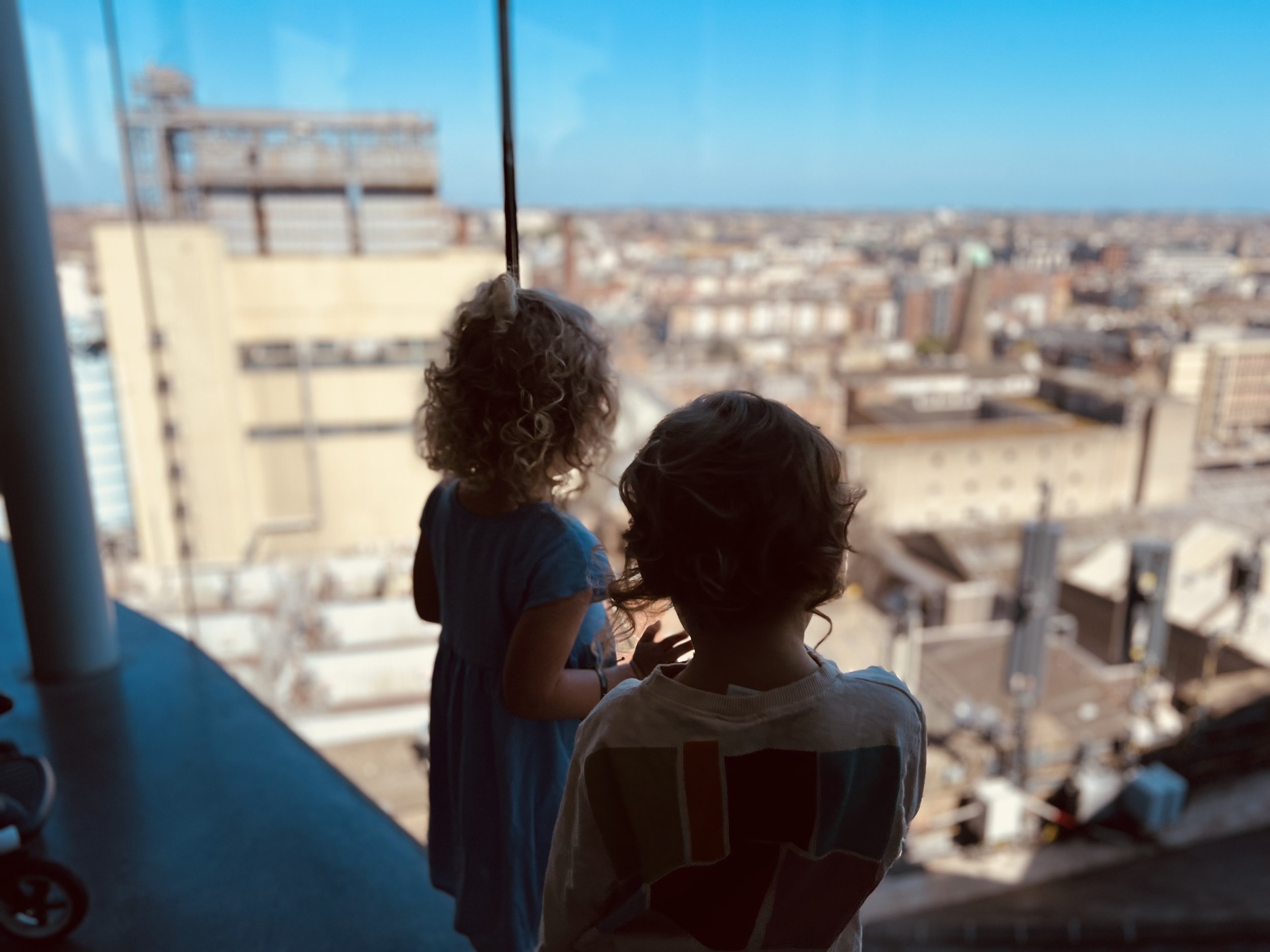
A symbol of Irish pride and Dublin’s history, with sweeping city views from the bar at the top.
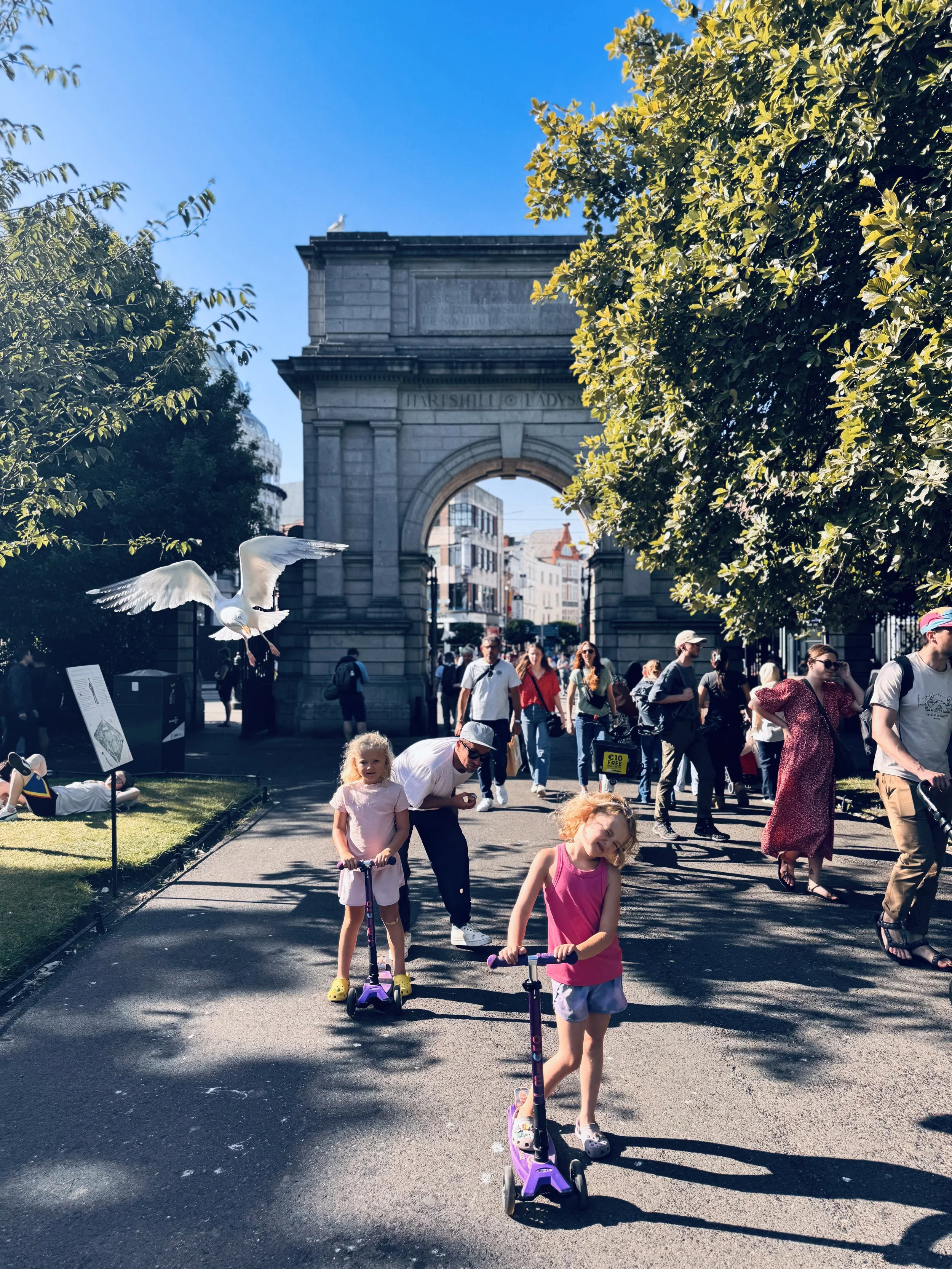
A beautiful Victorian park with winding paths, a pond, and an enclosed playground.
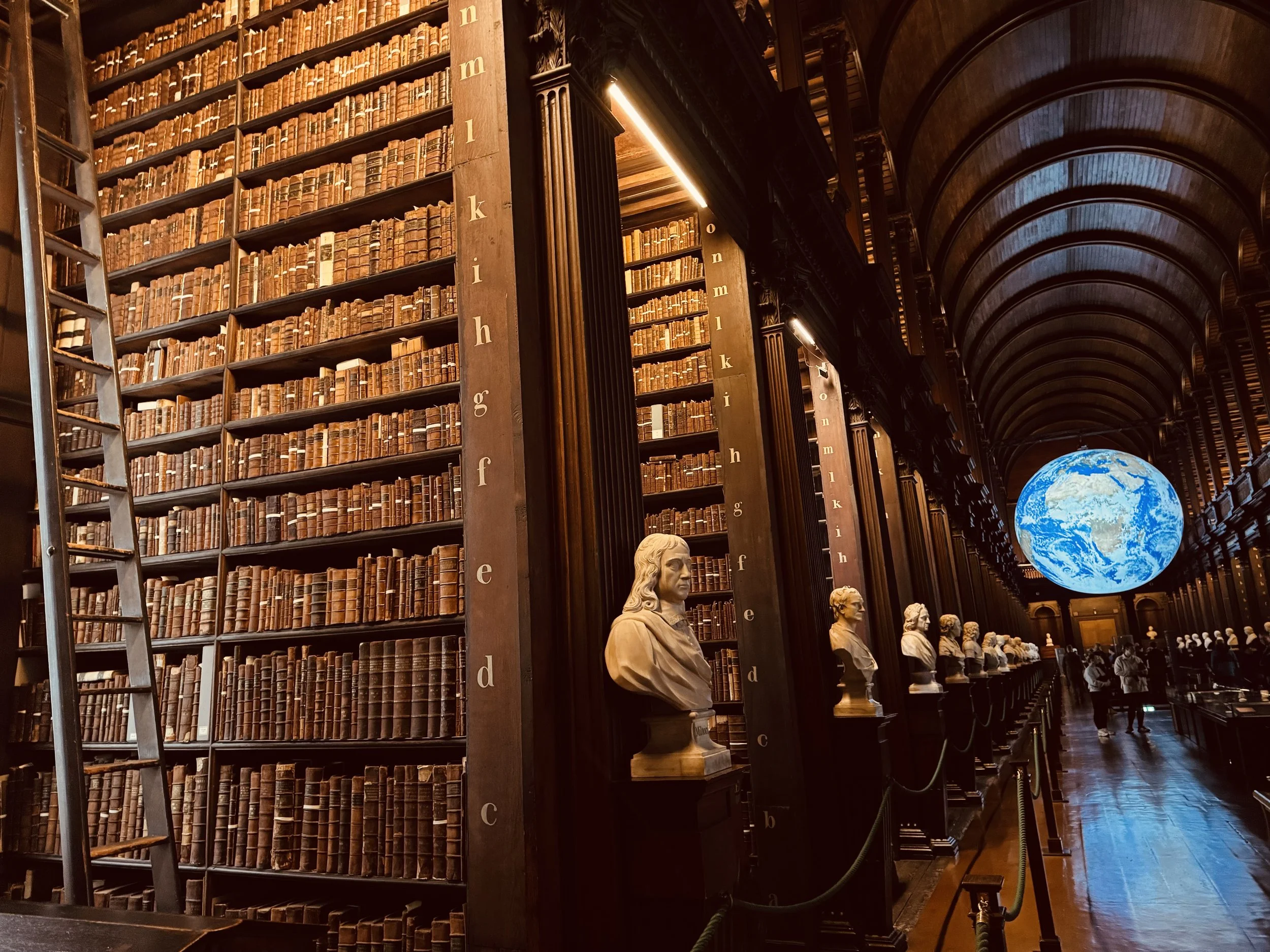
One of the world’s most beautiful university campuses and home to the Book of Kells.
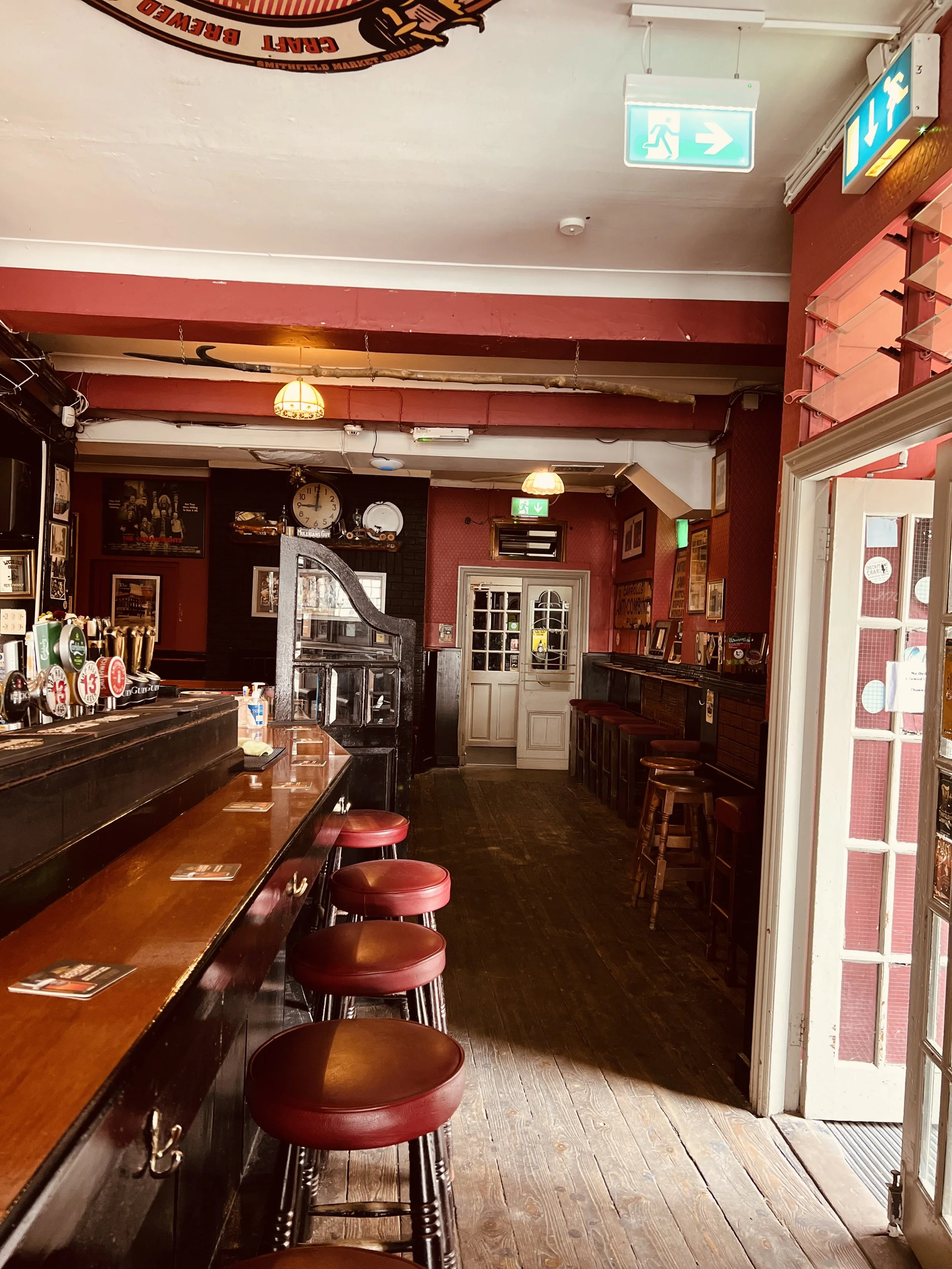
A legendary Dublin pub with traditional Irish music every day, starting at 3pm.
Dublin sits at the mouth of the River Liffey on Ireland's east coast, on land that was settled by Vikings around 841 AD — the name itself comes from the Irish Dubh Linn, meaning "black pool," referring to a tidal pool at the confluence of the Liffey and Poddle rivers. Before the Vikings, the area was home to Celtic peoples for thousands of years. The Normans arrived in 1169 and built Dublin Castle, which still stands in the city centre today. For centuries, Dublin was the seat of British colonial administration in Ireland, and the tension between that history and Irish identity ran through everything: the 1916 Easter Rising was launched from the General Post Office on O'Connell Street, and the subsequent War of Independence ended with the partition of Ireland in 1921.
Modern Dublin is a city still working out its relationship with its past — and that unresolved quality gives it an energy that cities with tidier histories sometimes lack. The city you'll find today is confident, creative, and really, very cool.
Quick History:
A WEEKEND IN DUBLIN
With kids, Dublin is easy. There are parks everywhere, the streets along the river are flat, and the Irish are among the friendliest people on earth. The food scene has grown up considerably in the past decade and the city is walkable in a way that few European capitals are. We love Dublin as an easy first stop on a European trip, the flight is about an hour shorter than other European hubs, you can have great conversations with locals, chicken strips (they call them chicken goujons) are abundant and kids are welcome almost everywhere until 9pm.
FRIDAY
FUMBALLY → TRINITY → ST. STEPHEN’S GREEN → THE LIBERTIES
MORNING | THE FUMBALLY
Start your day at The Fumbally(~€10–15/person) a large, light-filled community café and produce market in Dublin 8 that has become one of the city's most loved morning spots - and an absolute must for our family every time we’re in Dublin. The space has high ceilings, communal tables, a relaxed pace, and staff who are warm and witty. The food is seriously good: scrambled eggs on sourdough with Gubbeen smoked cheese, excellent pastries and coffee, and the flourless chocolate pie is something we still think about. Grab a fun bottle of natural wine to enjoy once the kids go to bed tonight, and don’t skip the produce section, it’s fascinating. No reservations, but the line moves quickly.
LATE MORNING | TRINITY COLLEGE + THE BOOK OF KELLS
Trinity College (~€16/adult, ~€10/student, free under 4)is beautiful even if you never make it inside the library, but the Book of Kells (a book of illuminated manuscripts made by Celtic Monks around 800 AD) and Long Room are the main attractions. The Long Room itself is a wonder — a cathedral-length barrel-vaulted hall lined with 200,000 ancient books, marble busts, and the original 1916 Proclamation of Independence in a glass case at the far end. Note: as of 2025, the Long Room is undergoing conservation work; and most of the books are being restored so the Long Room is fairly empty. However the Book of Kells remains on display and a new, very cool exhibition has been created around it in a series of annexed storage container buildings (there are even talking statues).
Check Trinity's website for current access before you go and book tickets online in advance. They're the same price as buying at the door, but the time slots can sell out. (I went one afternoon assuming I could purchase at the door and there weren’t any spots left for the day so I had to buy tickets for first thing the next morning).
If the kids aren’t interested, you could take turns going in (allow one hour) while the other takes them down the adjacent Grafton Street. There’s a Build-a-Bear, coffee and a LEGO Store where for $7 they can get their name engraved on a lego block and build a custom lego of themselves.
SUMMER HOUSING OPTION | TRINITY COLLEGE
You can also stay at Trinity College in the summertime! You have to book far in advance but the student housing is available for a low cost and there are limited family rooms in an excellent, central location.
LUNCH + PLAY | ST. STEPHEN’S GREEN + DEVITT’S
A ten-minute walk south, St. Stephen's Green (free, open daily 7:30am–dusk) is a 27-acre Victorian park that has been open to the public since 1880. There is a large pond with ducks and swans, and a fully enclosed playground with benches. The paths are wide and on a sunny day the whole city seems to be here. When you're ready, walk 9 minutes to Devitt’s Pub on Camden Street. A traditional Irish Pub with exceptional food and service, lunch is the time to take your kids. They have chicken goujons (strips) and fries with a curry sauce and an excellent salmon chowder. It might be worth a quick google ahead of time to see if any big Irish sporting events are being broadcasted as it will be packed if that’s the case. Otherwise it’s mellow and great during the day.
AFTERNOON | GUINNESS STOREHOUSE
Next up, the Guinness Storehouse (~€26/adult, ~€10/ages 5–17, free under 4) will make you a fan of Guinness even if you think you aren't. Seven floors built around a pint-glass-shaped atrium take you through the entire story of the stout and how the Guinness family largely secured water rights for the people of Dublin. There are interactive exhibits, decades of advertising, and the Gravity Bar on the seventh floor with 360-degree panoramic views of Dublin and your complimentary pint. For kids, they have soft drinks and an audio tour with labelled lookout points (and here's where your phone with pre-downloaded games for them to play so you can enjoy your pint in peace comes in handy). Budget two hours. Book tickets online in advance — often cheaper and you skip the lines. Aim to reach the Gravity Bar before 2pm for the clearest views.
DINNER | LAS TAPAS DE LOLA
Dinner is at Las Tapas de Lola (~€25–45/person, open daily from 5pm) on Wexford Street — an Irish-Spanish co-owned tapas restaurant that is dimly lit, vibey as it gets and ideal for kids: lots of small dishes arriving continuously, nothing precious or fussy, and a lively room where their chatter is an addition to the atmosphere. Order the chicken croquettes, the garlic-fried chicken on the bone, the pan con tomate and the patatas bravas. Actually, order more than that and watch your kid get so swept up in the restaurant’s energy that they forget they’re opposed to trying new foods. Book ahead, especially on Friday nights.
SATURDAY
HOWTH HARBOUR → → THE COBBLESTONE → CAPEL STREET
MORNING | HOWTH BY THE SEA
DART (~€5 return, free under 5)
Take the DART from Connolly or Tara Street to Howth. It’s about 25 minutes and makes for a perfect little train adventure with kids. The DART is scenic, stroller-friendly, and the train hugs the coastline for part of the ride. Howth is the end of the line, so you don't have to worry about missing your stop.
A Leap Visitor Card works on the DART, Dublin Bus, and Luas.
HOWTH HARBOUR + EAST PIER
The harbor is free to explore, and keep an eye out for the seals bobbing between the boats. Walk the East Pier — about 15 minutes each way. It’s flat and stroller-accessible, with great views back toward Dublin. There’s also a weekend market on Saturdays and Sundays from 10am–5pm, with crafts, artisan foods, snacks, and ice cream. There is a little playground near the Starbucks (don’t mind if we do) and a small sandy beach at the base of the East Pier is good for shell-collecting and crab-spotting in the rock pools.
LUNCH | THE OAR HOUSE
For lunch, head to The Oar House (~€14–32/person). Tucked along the West Pier in a restored old fishing cottage, it’s one of the best spots in Howth for fresh Irish seafood without feeling overly formal. The atmosphere is relaxed and welcoming with families (and a dedicated kid’s menu of fish, salmon, chicken strips and spaghetti). The menu changes with the day’s catch, but the local favorites are the Dublin Bay prawns, seafood chowder, crab claws, and perfectly crisp fish and chips. If the weather’s nice, try to grab a seat outside near the harbor — watching the fishing boats come and go is always a treat. Try to catch the DART back to Dublin by 3:30pm.
RAINY DAY SWAP
If all that gorgeous Irish landscape is getting watered while you’re there, throw on your rain gear and head to a museum. We like the following for kids.
The Ark: This children’s cultural centre has art, theatre, workshops and hands-on activities, so it’s an easy place to escape the rain while still doing something fun. Prices vary by activity, but kids’ workshops are generally around €10–€13.
EPIC The Irish Emigration Museum: Fascinating for the whole family, It tells the story of Irish emigration through immersive exhibits, games and storytelling. From €25 adults / €11 kids, with discounts for booking ahead.
The Little Museum of Dublin: Small, quirky and very Dublin. The guided tour is short and entertaining, and it’s a nice way to get some local history without committing to a giant museum. €18 adults / €45 for a family ticket (2 adults + up to 3 kids)
OR A RAINY DAY TEA:
If you want a traditional afternoon tea somewhere that feels a little more relaxed, I’d put the Old Music Shop on your list. It’s a good option with kids since it doesn’t feel as formal as some of the fancy hotel teas. They serve a hot chocolate option of the kids our girls loved when they were little. Afternoon tea is around €40 per adult If you’d like a fancier option: The Atrium Lounge is inside the College Green Hotel and sits underneath a huge five-story glass ceiling, with all the sandwiches, scones and little sweets you’d expect and an adorable kids service with plenty of kid friendly tea options as well. €65 per adult, or €85 with Champagne.
AFTERNOON | BACK TO DUBLIN + THE COBBLESTONE
Ten minutes' walk from the station, The Cobblestone (Free, traditional music sessions Monday–Friday from 5pm, Saturday–Sunday from 2:30pm) is Ireland's most famous traditional music pub — a family-run Smithfield institution that became Dublin's most famous planning fight in 2021 when a developer proposed demolishing most of it for a hotel. Locals turned out in the hundreds to stop them and the pub won. Kids are fine in the early evening - maybe give yourself 30 minutes for this, nearby there is a small playground on the promenade by HayMarket Square if the kids gets too restless, but the music is captivating and our girls watched in awe. The Cobblestone does not serve food.
DINNER | THE BLACK SHEEP
From the Cobblestone, head to the Black Sheep Pub(~€10–28/person) for dinner. If the kids need to move after your Cobblestone Stop, there is St. Michan’s Park (a block and a half off your route from Cobblestone to Black Sheep) with fun play equipment in a circular formation. The pub, tucked along Capel Street, it’s known for excellent Irish craft beer and surprisingly great food — think hearty steak sandwiches, fish and chips, burgers, and one of the better kids’ menus you’ll find in the city center. The atmosphere is lively but relaxed, with plenty of space. If the weather’s nice, grab a table outside and soak up the energy of one of Dublin’s coolest streets.
DINNER OPTION 2 | FISH SHOP
If you aren’t tired of fish and chips yet, head to Fish Shop (~€18–28/person) on Benburb Street. It’s one of the best fish and chips in Dublin — a tiny, focused spot run by a husband and wife, who serve a daily-changing menu of locally caught, beer-battered fish alongside an exceptional wine list of over 30 bottles, all available by the glass. The room is small, with only 16 barstools and a stripped-back aesthetic. Book ahead — it fills up fast. If you can't get a table, takeaway is available and the canal nearby is a perfectly good place to eat it.
NIGHTCAP | JOHN FALLON’S — THE CAPSTAN BAR
Nightcap at John Fallon's — The Capstan Bar(~€6–20/person). Founded in 1619 — not a typo —it’s one of the oldest continuously operating licensed premises in Ireland (and older than some countries, for those counting). We have stayed at the Hyatt Liberties at least four times mostly because of its proximity to Fumbally and this pub. The interior is exactly what you'd want: dark wood, worn floors, warm lighting, and the kind of spot that feels lived-in and actually patronized by locals. We had many locals tell us it’s the best pint of Guinness in Dublin, and the main bartender has a very entertaining obsession with American whisky. Children are welcome in the earlier evening. Sit near the window with a view toward St. Patrick's Cathedral. Or if you're staying nearby and can go post-bedtime — try to grab a spot at the bar. The conversation is great on slower evenings.
SUNDAY
AIRFIELD ESTATE → PHOENIX PARK → DINNER
MORNING | AIRFIELD ESTATE
Start Sunday at Airfield Estate (~€15/adult, ~€6.50/child 3–17, free under 3, open Tuesday–Sunday 9:30am–5:30pm) in Dundrum — Dublin's only urban working farm. 38 acres of gardens, farm animals, heritage buildings, and outdoor play areas, twenty minutes from the city centre by Tram. There are Jersey cows being milked each morning, donkeys and sheep in the farmyard, egg-collecting sessions, donkey talks, woodland walks, and play areas scattered through the grounds. The daily schedule includes a 10am egg talk, 10:30am jersey herd milking, and afternoon storytime — all included with admission. The Overends Kitchen café serves excellent food using produce from the farm. The estate covers the story of Letitia and Naomi Overend — two sisters who farmed this land into the 1990s and left it in trust to the Irish people, which explains the careful, purposeful quality of the whole place. Take the Luas Tram Green Line to Balally — turn right out of the station, walk up the hill, five minutes to the entrance. Vastly easier than parking. Allow three hours here.
AFTERNOON | PHOENIX PARK
After Airfield, take a taxi or the Luas toward the city and stop at Phoenix Park (free, open daily dawn to dusk) — one of the largest walled city parks in Europe at 1,750 acres, and a great spot for a relaxing afternoon in Dublin. There is a herd of several hundred fallow deer roaming freely through the park, and encountering them up close is a real treat. Head toward the Fifteen Acres (the large open meadow in the western section) and wait. The deer tend to gather here in the late afternoon. Dublin Zoo is done well and located inside the park as well — open daily 9:30am to 6pm — though if you're doing Airfield in the morning, the zoo is ambitious for one day.
DINNER | WRIGHTS ANGLERS REST
The weekend ends at Wrights Anglers Rest (~€18–32/person) on the western edge of Phoenix Park, just off the banks of the River Liffey. A family friendly gastropub, the menu is solid Irish cooking (fish pie, a lamb shank, fish and chips), and the whole atmosphere is easy and cool, perfect.
WHERE TO STAY
We look for hotels with real character in the right neighborhoods that can actually accommodate 4 people — which is surprisingly hard to find across the whole European continent.
Stauntons on the Green
From €200/night
A boutique stay for families who want charm over chain hotels. Housed in a row of Georgian townhouses overlooking St. Stephen's Green, it feels like you are staying in an elegant Dublin home. Family rooms are available, and the location is hard to beat. The hotel garden opens into Iveagh Gardens and you are steps from St. Stephen's Green, an easy walk to Grafton Street, Trinity College, and many of the city's best museums and restaurants.
NYX Hotel Dublin Portobello
From €250/night
A stylish, family-friendly base just south of Dublin’s city center, overlooking the Grand Canal in the lively Portobello neighborhood. It strikes a nice balance between local charm and easy sightseeing: St. Stephen’s Green is about a 15-minute walk away, while Temple Bar, Dublin Castle, and Grafton Street are all easily reached on foot or by nearby bus routes. The family rooms are spacious and downstairs, the buzzing bar and restaurant give the property a fun, boutique-hotel feel.
The Green Hotel
From €200/night
Newly refurbished in 2024 and located directly across the street from St. Stephen's Green, and only a short walk from Grafton Street The Green is as well-placed as a Dublin hotel gets for this itinerary. Pen & Player is the cocktail bar next door (you can access it through the hotel) and is excellent for an evening nightcap once the kids are down. A little trick for booking here: Book the Junior Suite that accommodates 3 and request an extra (complimentary) bed.
Hyatt Centric The Liberties
From €250/night
The best-positioned hotel for Day One's Liberties itinerary: a 15 minute walk from the Guinness Storehouse, directly across the street from St. Patrick's Cathedral, adjacent to Fallons Capstan, and around the corner from Fumbally. Family rooms sleep two adults and one child in a king plus chaise sofa configuration; complimentary cribs for smaller children. *This hotel is the single exception to accommodating 4 * but its location and the fact they never bat an eye at our family (of four) only booking one room puts them high on our list. They have limited underground parking as well, but you won’t need a car in Dublin.
The Mespil Hotel
From €150/night
A modern, welcoming hotel overlooking the Grand Canal where children under twelve stay free and family rooms sleep four comfortably. Fifteen minutes' walk from St. Stephen's Green, well connected by bus. The best value option on this list that doesn't compromise on comfort or location.
Hotel pricing is dynamic and subject to change.
A FEW THINGS TO KNOW
The Weather: we’ve had great, sunny days in Dublin and torrential downpours. We’d recommend bringing a waterproof jacket, waterproof shoes and a rain cover for your stroller.
Getting Around: walk the city centre; use the Luas for cross-city trips; taxi for everything else. The Luas Red and Green lines cover most of this itinerary. Dublin parking is expensive and the streets are narrow. Do not drive unless you have to.
Pub Culture: Irish law dictates that children under 18 cannot enter pubs after 9 pm, but Pubs have individual authority to make that time earlier. It’s best to start checking around 6pm if children are still permitted before you make the trip to one.
Power Outlets: Ireland, Scotland and The UK all use Type G outlets (which are different from the EU Type C/E/F/Schuko outlets). You’ll need to bring a United Kingdom adapter or Boots Pharmacies (located all over Dublin) sell inexpensive EU to UK adaptors once you arrive.
Brexit: Because of Brexit, (and Ireland’s proximity to Northern Ireland) you will have to do passport control if you’re traveling onto the European Union. Plan your timeline to include customs - although the Dublin airport has a time saving dedicated family lane through both customs and security.
Traveling to the United States from Dublin? You’re in luck! The USA’s passport control is located in the Dublin Airport which means you don’t have to pass through any passport control once you arrive in the United States.
Tipping: 10–12.5% at sit-down restaurants is appropriate. Many restaurants add a discretionary service charge to your bill, which you're allowed to remove. Pubs — no tipping expected when ordering at the bar. Rounding up at cafés is fine.
Cleaning up after your children is always appreciated everywhere.
IF YOU HAVE MORE TIME
Take a taxi north to Glasnevin Cemetery and Museum (grounds free, tours from €10, open daily 10am–5pm). This may sound like an unlikely stop with children — a Victorian cemetery covering 124 acres, the resting place of 1.5 million people — and yet it is one of the most extraordinary places in Dublin. The grounds are beautiful: Celtic crosses and yew trees and rolling green grass, with the 180-foot O'Connell Round Tower rising from the centre. You can wander for free, or take the daily guided Irish History Tour. There is a secret gate in the wall that connects the cemetery to the National Botanical Gardens next door — walk straight through, and the Gardens are free. Afterwards, step around the corner to the Gravediggers pub — officially John Kavanagh's — for what many consider the finest pint of Guinness in the city. No kids permitted after 9pm and it’s a tight space so leave your strollers outside.
Malahide Castle and Gardens (~40 minutes north by car or DART + bus) is an 800-year-old castle surrounded by 260 acres of parkland, with a fairy trail specifically designed for small children — fairy doors in the trees, hidden sculptures, and other small installations. The Avoca Café inside the grounds is excellent for lunch. Works well as a standalone half-day, or on the way in from Dublin Airport.
Dún Laoghaire Pier Walk and Teddy's (free, 25 minutes south by DART): take the DART south to Dún Laoghaire and walk the Victorian pier to the lighthouse — flat, stroller-friendly, twenty minutes each way, sea views in every direction. The reward at the end is Teddy's Ice Cream, which has been scooping cones on this pier since 1950. Get the 99 — a soft-serve cone with a Flake bar pressed into it - the Irish national ice cream.
WORTH A MENTION:
If you need a breakfast recommendation on any morning this itinerary doesn't have one accounted for: Bread 41 (41 Pearse Street, open daily from 7am) is Dublin's most talked-about bakery — outstanding laminated pastries, exceptional coffee, and lines that move quickly. Opens at 7am and sells out of croissants by mid-morning on weekends. And Bewley's Café(78–79 Grafton Street, open daily from 8am) has been caffeinating Dubliners since 1840 — an ornate Victorian interior with Harry Clarke stained-glass windows, high ceilings, and a downstairs bakery where you can watch cinnamon buns being pulled from the oven. Order the full Irish breakfast. They’ll bring out crayons and paper for the kids when you sit down.